
How Fear Saved Me
The Girl Who Said Yes to Herself.


The Girl in the Basement
Downstairs in Johnny’s basement, we stood around the pool table, each of us trying to fit in somewhere.
None of us seemed to know where that somewhere was.
It was ninth grade. My first year in public school.
I was still learning the rules of friendship, belonging, and social interactions.
Frankie leaned over the pool table, lined up his shot, and sank the eight ball.
The room erupted.
“Let’s celebrate. Drink up,” his older brother said.
I looked around and noticed everyone holding a beer.
Then someone turned to me.
“Want a beer?”
My answer was always the same.
“I don’t drink.”
Sometimes that answer ended the conversation.
Sometimes it became the beginning of another one.
“Why not?”
It wasn’t because I was morally opposed to alcohol.
It wasn’t because I thought I was better than anyone else.
It was because I had epilepsy.
The words came out slowly.
“I have epilepsy.”
Then I waited.
Often, that was enough.
For much of my childhood and adolescence, those three words explained things I could not.
They carried fear, uncertainty, limitation, and sometimes understanding.
For much of my childhood and adolescence, seizures were part of my life.
Imagine having a seizure in public and not remembering any of it.
Only hearing about it afterward.
People telling you what it looked like.
How frightened they were.
How scared they were to be around you afterward.
I learned early that epilepsy did not just affect me.
It affected the people around me, too.
My teenage years were especially difficult. Hormones, emotions, and seizures created a level of instability that felt overwhelming at times.
Eventually, my seizures came under control.
For the first time, I experienced what it felt like to have some certainty in my life.
I did not want to lose it.
I was fortunate to have a neurologist who became much more than my doctor.
He was a mentor, a guide, and in many ways a surrogate father.
He believed I was capable of becoming someone I could not yet see.
When I doubted myself, he saw possibility.
When I was afraid, he reminded me of my strength.
One day he said something that stayed with me.
“Being afraid of alcohol and drugs is a healthy fear.”
At the time, I did not fully appreciate the wisdom in those words.
He also offered something else.
Permission.
As I grew older, he explained that a sip of wine would not be catastrophic.
He wasn’t telling me to drink.
He was helping me understand that there was a difference between participation and intoxication.
There was room for moderation.
There was room for choice.
There was room for me to decide.
Oddly enough, that permission made the decision easier.
The freedom to choose was enough.
I chose not to drink.
Not because I was forbidden.
Not because I was afraid.
But because I understood the risk and trusted myself to make a decision that honored my health.
The fear of losing seizure control was greater than the fear of not fitting in.
So I said no.
Again and again.
The interesting thing is that saying no did not exclude me from the group.
I still laughed with my friends.
I still stood around the pool table.
I still belonged.
For a long time, I thought life presented us with either-or choices.
Looking back, I see something different.
I did not have to choose between friendship and my health.
I learned how to have both.
My no was not a rejection of connection.
It was a boundary that allowed me to feel safe, in control, and healthy enough to participate in the life unfolding around me.
It was one of my first lessons in living in the AND.
The Woman I Became
Today, I might enjoy half a glass of wine on a special occasion.
The fear I carried as a teenager has evolved into understanding.
I respect the fear I had then because it protected me when I needed protection.
And I respect the condition I still live with today.
The goal was never to live in fear.
The goal was to learn from it.
As I grew older, I came to understand the control I did have.
I could not control having epilepsy.
I could not control every circumstance life placed before me.
But I could control my environment.
I could choose proper sleep.
I could choose to take my medication regularly.
I could make decisions that supported my health rather than challenged it.
What once felt like limitations became acts of self-care.
I wasn’t limiting my life.
I was protecting it.
Sure, there are things I don’t do.
There always have been.
I don’t miss them.
What I remember instead is the freedom that came from knowing who I was and being comfortable enough to live accordingly.
While others were trying to fit in, I was learning how to stand comfortably in my own shoes.
That lesson has served me well for far longer than high school.
The lesson of epilepsy was one I learned early.
The lesson of valuing myself first took much longer.
My mother used to say, “Look out for number one.”
Number one was me.
It sounded simple.
It wasn’t.
For much of my life, I was willing to protect everyone else before I protected myself.
I learned to honor my physical boundaries early.
My emotional boundaries took much longer.
Decades longer.
Looking back, I can see that epilepsy may have been a protective factor in ways I did not understand at the time.
I never wished epilepsy away.
I simply wanted us to coexist peacefully.
Over time, epilepsy taught me caution, self-awareness, and restraint.
Lessons that served me well long after my seizures came under control.
Not every warning sign appears as a flashing light.
Sometimes it arrives as a feeling.
A hesitation.
A quiet voice asking us to pay attention.
Even my seizures had warnings.
Before a seizure, I often experienced an aura, a feeling that something was shifting before it happened.
I learned to trust those signals.
The aura gave me time to get somewhere safe.
Time to call someone.
Time to prepare emotionally for what might come next.
Looking back, I think boundaries serve much the same purpose.
They protect us.
The challenge is recognizing that wisdom before we have evidence to explain it.
First I learned to trust the auras.
Then I learned to trust myself.
The Whisper of Today
Looking back, I am proud of that younger version of myself.
The girl standing in Johnny’s basement.
The girl who said no to a beer and yes to herself.
At the time, it did not feel courageous.
It felt necessary.
Now I understand it was both.
It takes courage to be different.
It takes courage to disappoint people.
It takes courage to choose yourself when the crowd is moving in another direction.
Maybe I was listening to my mother after all.
She always said, “Look out for number one.”
Perhaps the girl standing in Johnny’s basement understood that lesson long before the woman writing these words.
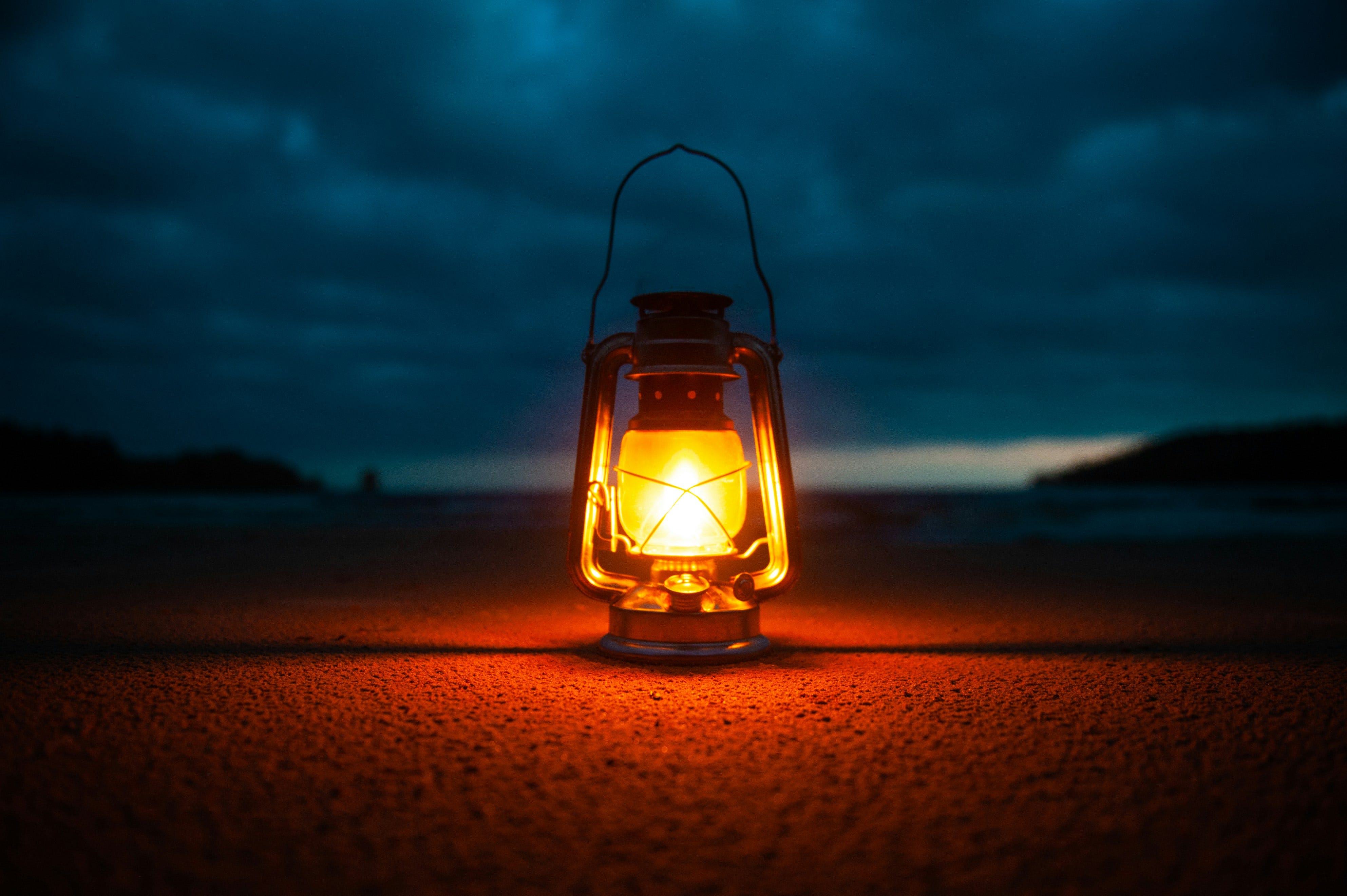
Epilepsy used to speak loudly, demanding to be seen.
Today, epilepsy is so quiet it is a whisper in my heart.
Still with me.
Still a part of me.
But no longer the author of my story.
I learned to listen to it.
I learned to respect it.
And in doing so, I learned something that would guide me for the rest of my life:
how to trust myself.
As I was writing this essay, I kept thinking about Me, Myself & I. Not because the song is about epilepsy. Because it’s about learning to choose yourself.
Author’s Note
If this story touched something inside you, I’d be honored to hear your reflections
Whether you’ve lived through chaos, rebuilt your voice, or carried wounds no one else could see, your story matters. Sharing reminds us that we are not alone in the slow, powerful work of becoming.
If this piece resonated, I’d be grateful for a like, a comment, or a share.
With Gratitude-
Chellie 🩷
A Few New Ways to Learn, Grow & Thrive Together
Beginning in July, I am excited to introduce two new subscriber offerings.
Wander & Wonder Book Group
Begins July 30
Our first book will be Awe by Dacher Keltner.
This monthly gathering is a free benefit for all subscribers. Together, we will explore books that invite curiosity, reflection, meaning, and wonder.
Paid subscribers will also receive a companion Book Group Guide with reflection prompts and additional resources.
Bridge Writers Group
July 6–24
Three weeks of daily writing prompts.
A space to build a writing habit, explore ideas, and connect with fellow writers.
Whether you write for yourself, your family, your work, or simply for the joy of it, you are welcome here.
As a thank you for supporting this publication, annual subscribers receive complimentary access to the July cohort.
I look forward to learning, writing, and wondering alongside you.
Chellie Grossman is a Certified Life Coach, Keynote Speaker, and Writer who empowers leaders to reclaim their voice, embrace their strength, and lead with authenticity and purpose.
Great piece. Hopefully these lessons will resonate with some young people out there facing some difficult choices!
Thank you for sharing your story, Chellie. You inspire me to put my own chronic health issues into perspective.
My beloved Golden Retriever, Jeri, began having seizures at age 10; she lived to be nearly 15. At first I was terrified, unsure of what was happening. Then I learned to take care of her before, during and after the seizure; I think my staying present with her let her know she was safe and not alone. (I hope my mentioning my dog in this context isn’t offensive to you!)
Thank you for being a role model of grace under pressure. ☺️